You Won’t Believe What Hidden Gems I Found Shopping in Harare
Harare, Zimbabwe, isn’t just a city—it’s a vibe. I went in looking for souvenirs but ended up falling in love with its architectural soul. From colonial-era facades to bold Afro-modern designs, every shopping district tells a story. What surprised me most? How the buildings themselves shaped my experience, turning simple errands into visual adventures. If you think shopping here is just markets and malls, trust me—you’re missing half the magic.
First Impressions: Stepping Into Harare’s Urban Rhythm
Arriving in Harare, the first thing that strikes you is how the city breathes. It doesn’t rush—it unfolds. Lush jacaranda and flame trees line wide boulevards, softening the edges of brick and stone buildings. Unlike densely packed metropolises, Harare offers space to pause, to observe. The skyline is modest, rarely rising above six stories in the central zones, which gives the city an intimate, human scale. This isn’t a place built for speed; it’s designed for presence. As I stepped out of the taxi near the city center, I noticed how the architecture immediately set a tone—orderly yet relaxed, historic yet evolving.
The Central Business District greets visitors with a mix of early 20th-century charm and mid-century modernism. Many buildings from the 1930s to 1960s still stand, their facades marked by symmetrical lines, recessed balconies, and subtle Art Deco flourishes. What’s remarkable is how these structures have been maintained, not preserved like museum pieces, but adapted to current needs. Banks, travel agencies, and clothing stores now occupy spaces once used by colonial offices, yet the original bones remain visible. The rhythm of the city is echoed in its streets—wide enough for comfort, shaded by trees, and lined with benches that invite lingering.
Avondale, a short drive from the center, offers a different architectural language. Here, low-rise shopping strips curve gently along tree-lined avenues. The buildings are more recent, mostly from the 1980s onward, but they respect the natural topography and greenery. Shops open directly onto sidewalks, creating a pedestrian-friendly flow. Glass fronts reflect sunlight during the day, while warm exterior lighting enhances visibility in the evenings. There’s a sense of safety and ease in Avondale—one that encourages exploration without haste. It’s a neighborhood where you can walk from a bakery to a bookshop to a craft boutique without feeling rushed, and where the design of the environment supports that slow, deliberate pace.
The Heartbeat of Commerce: Harare’s Main Shopping Hubs
Cambridge Street, Kwame Nkrumah Avenue, and Samora Machel Avenue form the commercial spine of Harare. Each carries its own rhythm, shaped by the architecture that frames them. Cambridge Street, with its mix of older two- and three-story buildings, feels like the city’s retail heartbeat. The street is narrow enough to create a sense of enclosure, yet wide enough to allow sunlight to filter through. Storefronts are closely packed, but not chaotic—each shop claims its space with clear signage and well-maintained entrances. What stands out is the variety: a tailor’s shop next to a spice vendor, a shoe repair stall beside a modern coffee bar. This diversity isn’t accidental; it’s supported by the flexibility of the buildings, many of which were designed with ground-floor retail and upper-level offices or residences.
Kwame Nkrumah Avenue, named after the Ghanaian independence leader, is broader and more formal. Lined with taller buildings—some reaching five or six floors—it conveys a sense of civic importance. The architecture here leans toward neoclassical and post-colonial modern styles, with columns, stone cladding, and large windows. These buildings were once government offices or financial institutions, but many now house clothing boutiques, electronics stores, and beauty salons. The street’s design encourages foot traffic with wide sidewalks and occasional shade trees. During the day, it buzzes with shoppers, delivery workers, and office employees on lunch breaks. The verticality of the buildings creates a kind of urban canyon effect, which helps block the midday sun and makes walking more comfortable.
Samora Machel Avenue, running parallel to the others, has a more contemporary feel. Recent renovations have introduced better lighting, smoother pavement, and improved drainage. The buildings here are a mix of restored colonial structures and newer infill constructions. What’s notable is how the street layout prioritizes pedestrian movement—crosswalks are clearly marked, and traffic signals are timed to allow safe crossing. Storefronts are clean and well-lit, and many include outdoor seating areas, turning shopping into a social experience. The architectural coherence of these three avenues—different in character but unified in purpose—shows how urban planning and design can elevate everyday commerce.
Colonial Echoes: How History Shapes Today’s Retail Spaces
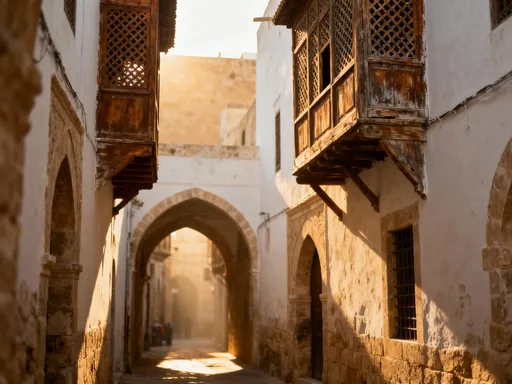
Scattered throughout Harare’s city center are remnants of its colonial past, not as relics of division, but as living parts of the present. These buildings, constructed mainly between the 1920s and 1950s, were designed for durability and elegance. Many feature high ceilings—often over 12 feet—which allow hot air to rise, naturally cooling interior spaces. Large arched windows and wooden shutters control sunlight and airflow, reducing the need for artificial cooling. Deep verandas provide shelter from rain and sun, creating natural gathering spaces outside shops and cafes. These architectural elements weren’t just aesthetic choices; they were practical responses to Zimbabwe’s subtropical climate, and today, they continue to serve shoppers and business owners alike.
One of the most striking examples is a row of shops on Second Street, where a series of interconnected buildings with red-tiled roofs and stucco walls now house independent boutiques and art galleries. The original layout, with narrow shop fronts and shared party walls, has been preserved, but interiors have been modernized with updated lighting, flooring, and display systems. The high ceilings make the spaces feel open and airy, even when crowded. Natural light pours in through the tall windows, highlighting handwoven textiles, carved wooden masks, and ceramic vases. These features don’t just enhance the shopping experience—they create an atmosphere of calm and authenticity that larger, more generic spaces often lack.
Preservation efforts in Harare have been led by a combination of municipal initiatives and private investment. The Harare City Council, in partnership with heritage organizations, has implemented guidelines for restoring historic facades while allowing modern use. In some cases, original materials like Zimbabwean sandstone and teak wood have been reused, maintaining continuity with the past. Adaptive reuse—turning old offices into retail spaces, former banks into cafes—has become a model for sustainable urban development. These efforts show that history doesn’t have to be sacrificed for progress; instead, it can be the foundation for it. When you shop in these spaces, you’re not just buying a product—you’re participating in a story of continuity and reinvention.
Afro-Modern Marvels: Where Culture Meets Contemporary Design
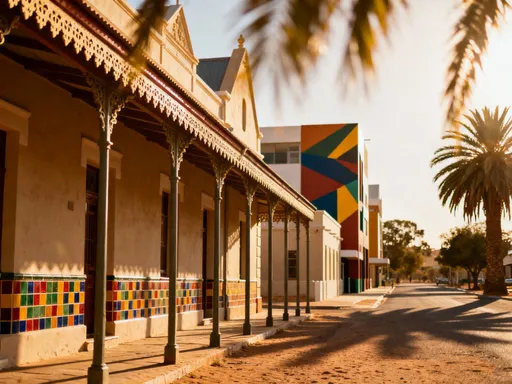
While colonial architecture tells one chapter of Harare’s story, a newer wave of design is writing the next. Across the city, especially in emerging commercial zones, a style known as Afro-modernism is gaining prominence. This architectural movement blends contemporary forms with traditional Zimbabwean elements, creating buildings that are both functional and symbolic. One of the most distinctive features is the use of local materials—particularly Chiremba dolerite stone, quarried from the surrounding hills. This dark, durable stone is used in walls, columns, and decorative panels, giving buildings a grounded, earthy presence.
Thatched roofing, once reserved for rural homes and cultural centers, is now being incorporated into boutique shops and outdoor market pavilions. These roofs provide excellent insulation, keeping interiors cool during the day and warm at night. Their organic texture contrasts beautifully with smooth concrete or glass, creating a visual dialogue between old and new. In Borrowdale Village, a cluster of shops features conical thatched roofs inspired by the traditional rondavel design. The effect is both striking and welcoming—it signals that this is a place rooted in local culture, not imported aesthetics.
Perhaps the most powerful influence comes from the ancient city of Great Zimbabwe, whose stone walls and conical towers are echoed in modern commercial architecture. Some newer buildings incorporate circular forms, stepped profiles, and symbolic patterns carved into stone or metal screens. These aren’t literal replicas, but abstract interpretations that evoke a sense of heritage and identity. In one shopping plaza near Sam Levy’s Village, a central courtyard is designed to resemble a scaled-down version of the Great Enclosure, with curved stone walls and a radial pathway system. Shoppers walk through this space not just to move from store to store, but to experience a sense of place. This kind of design doesn’t just house commerce—it celebrates it as an expression of national pride and creativity.
Markets With Character: Mbare and Borrowdale’s Architectural Contrast
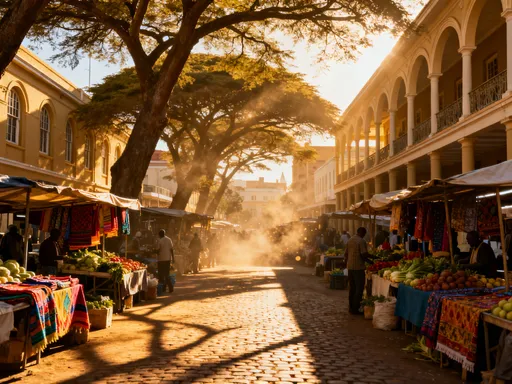
No visit to Harare is complete without experiencing its markets, and two of the most revealing are Mbare Musika and Borrowdale Village. Though only a few miles apart, they represent vastly different approaches to retail architecture. Mbare Musika, one of the city’s oldest and busiest markets, operates in an open-air, informal setting. Stalls are arranged in loose rows, covered by corrugated metal roofs supported by steel poles. There’s no master plan—vendors set up where space allows, creating a dynamic, ever-changing layout. The lack of formal structure might seem chaotic at first, but it reflects a deep understanding of adaptability and community.
The architecture of Mbare is functional and resilient. The metal roofs provide essential shade and rain protection, while gaps between stalls allow airflow, reducing heat buildup. Vendor stalls are often made from repurposed materials—wooden crates, fabric awnings, plastic sheeting—demonstrating resourcefulness and creativity. Despite the informality, there’s a clear organization: fruit and vegetables in one section, grains and dried foods in another, crafts and textiles further on. The spacing between aisles is just wide enough for two people to pass, encouraging close interaction between buyers and sellers. This intimacy is part of the experience—shopping here is not a transaction, but a conversation.
In contrast, Borrowdale Village is a planned, upscale shopping complex with wide walkways, landscaped gardens, and carefully curated storefronts. The buildings are single- or two-story, with stone accents, wooden beams, and large glass windows. Canopies extend over pedestrian paths, providing shade without blocking views. The layout is circular, with a central fountain and seating areas that invite rest and socializing. While the prices are higher and the clientele more affluent, the design still honors local character. Art installations by Zimbabwean sculptors are displayed throughout, and many shops feature handmade goods from rural cooperatives. The architecture here speaks of refinement, but not detachment—it remains connected to the cultural fabric of the city.
Together, Mbare and Borrowdale illustrate how architecture can reflect socioeconomic diversity without erasing cultural authenticity. One thrives on spontaneity and resilience, the other on order and elegance. Yet both prioritize human experience over efficiency alone. In Mbare, the informal design fosters community and accessibility; in Borrowdale, the formal design promotes comfort and leisure. For the thoughtful shopper, visiting both offers a fuller understanding of Harare’s commercial soul.
Inside the Malls: Eastgate and Fourways as Urban Microcosms
Enclosed shopping malls like Eastgate and Fourways represent a different kind of architectural experience—one that prioritizes climate control, security, and convenience. These spaces are designed as self-contained environments, where temperature, lighting, and acoustics are carefully managed. Eastgate, one of Harare’s largest malls, spans multiple levels connected by escalators and glass-enclosed walkways. Its interior design emphasizes openness—high ceilings, polished floors, and abundant natural light from skylights. The layout is radial, with anchor stores at each end and smaller boutiques along the central corridors. This design maximizes visibility and foot traffic, guiding shoppers organically from one area to the next.
What sets Eastgate apart is its integration of local art and culture. Throughout the mall, murals by Zimbabwean artists depict scenes of daily life, wildlife, and historical moments. Sculptures made from recycled metal and stone are placed in common areas, turning the mall into an informal gallery. Even the restrooms feature decorative tiles with Shona patterns. These touches ensure that the space feels Zimbabwean, not generic. The mall also includes a food court with stalls offering traditional dishes like sadza, muriwo unedovi, and grilled chicken, served in settings that mimic outdoor markets. This blend of international retail standards and local expression creates a unique hybrid environment—one that respects global trends without losing its roots.
Fourways Shopping Centre, though smaller, follows a similar philosophy. Its design focuses on efficiency and comfort, with wide corridors, ample seating, and clear signage. The use of natural materials—wood, stone, and woven textures—softens the modern aesthetic. One of the most thoughtful features is the placement of large windows in common areas, allowing views of the surrounding greenery. This connection to the outdoors helps reduce the feeling of being enclosed. The mall also hosts regular cultural events—live music performances, craft fairs, and art exhibitions—which activate the space beyond shopping. These events are often held in a central atrium designed for flexibility, with retractable seating and modular lighting. In both Eastgate and Fourways, architecture serves not just as a container for commerce, but as a facilitator of community life.
Why Design Matters: How Architecture Elevates the Shopping Experience
What becomes clear after exploring Harare’s shopping landscape is that architecture is not a passive backdrop—it is an active participant in the experience. Every design choice, from the height of a ceiling to the angle of a roof, influences how people move, feel, and connect. Shaded walkways encourage longer stays; natural light improves mood and product visibility; open layouts foster social interaction. These elements may seem subtle, but their cumulative effect is profound. A well-designed space doesn’t just make shopping easier—it makes it more meaningful.
Emotional responses are deeply tied to physical environments. In a colonial-era building with high ceilings and wooden floors, there’s a sense of timelessness and dignity. In a thatched-roof boutique, there’s warmth and intimacy. In a bustling market under metal canopies, there’s energy and immediacy. These feelings shape how shoppers relate to the products they buy and the people they meet. A scarf purchased under a veranda feels different from one bought in a fluorescent-lit stall—not because of the item itself, but because of the context in which it was acquired.
Thoughtful design also fosters a deeper connection between people and place. When architecture reflects local materials, history, and culture, it creates a sense of belonging. Shoppers aren’t just visitors; they become part of the story. This is especially true in a city like Harare, where every building carries layers of meaning—colonial, independence-era, contemporary. By engaging with these spaces, shoppers participate in a dialogue about identity, resilience, and creativity. Architecture, in this sense, becomes a form of storytelling—one that unfolds step by step, street by street.
Moreover, good design supports sustainability. Buildings that use natural ventilation, local materials, and passive cooling reduce energy consumption and environmental impact. Markets that adapt to changing needs without major reconstruction demonstrate resilience. Malls that incorporate public art and cultural programming contribute to social well-being. In Harare, where resources can be limited, these considerations are not luxuries—they are necessities. The city’s architectural diversity shows that beauty and function can coexist, even under constraints.
Ultimately, the way a city designs its shopping spaces reveals its values. In Harare, the blend of preservation, innovation, and cultural expression suggests a deep respect for both past and future. It shows a commitment to creating environments that serve people, not just transactions. When architecture is treated as an essential part of the retail experience, shopping becomes more than consumption—it becomes discovery, connection, and celebration.
Harare’s architecture doesn’t just house commerce—it converses with it. Every column, rooftop, and courtyard adds meaning to what you buy and how you feel while buying it. More than a shopping trip, it’s a journey through identity, resilience, and creativity. Next time you visit, look up—you might just see the soul of the city staring back.